
Vehicle Dynamics Measurement
Wheel Force Transducer Solutions for Automotive Testing and Chassis Development
Measure wheel forces and moments for chassis development, suspension tuning, tire analysis, and road load validation.
WFT Overview
Wheel Force Transducer Solutions for Automotive Testing and Chassis Development
A wheel force transducer is one of the most important measurement tools in modern vehicle testing and chassis development. It is used to measure the forces and moments acting at the wheel during real-world driving, proving ground testing, and test stand evaluation.
For automotive engineers, accurate wheel force measurement is essential for understanding vehicle behavior, tire performance, suspension response, and chassis dynamics.
Advanced systems such as imc WFT and Kistler WFT are widely used in the development of passenger cars, SUVs, light trucks, and performance vehicles.
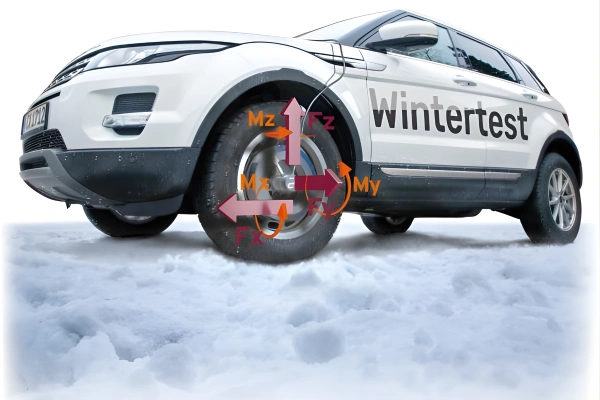
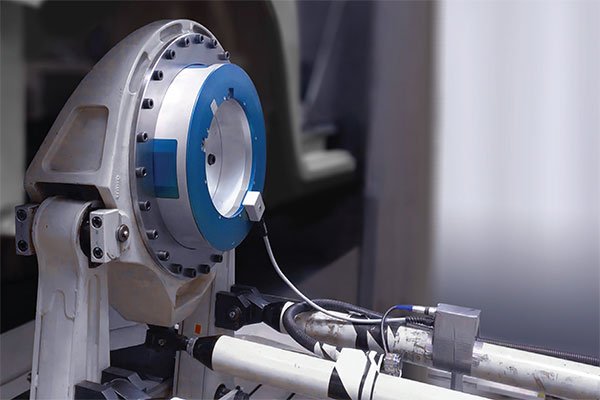
Six-Axis Measurement
Complete Wheel Force Measuring System
A high-quality wheel force measuring system helps engineers capture data across all three directions of motion and rotation.
By measuring forces such as Fx, Fy, Fz and moments such as Mx, My, Mz, a vehicle wheel force transducer gives a complete picture of how the tire contact patch behaves under dynamic load.
Talk to ATS Group
Need Wheel Force Measurement Support?
Define capacity, mounting, data acquisition, and analysis requirements for WFT testing.
Quick support for product selection and technical consultation.
imc WFT
imc WFT for Automotive Applications
imc WFT solutions are designed for precise and reliable wheel force measurement in automotive testing environments. These systems support the collection of multiaxial force data under real road conditions, helping engineers evaluate chassis performance, tire interaction, and vehicle dynamics.
In test-track applications and laboratory validation, imc WFT provides the level of measurement detail required for high-end development work.
For teams involved in suspension and chassis development, a wheel force transducer for cars is essential because it shows how load is transferred through the wheel during cornering, braking, acceleration, and uneven road conditions.
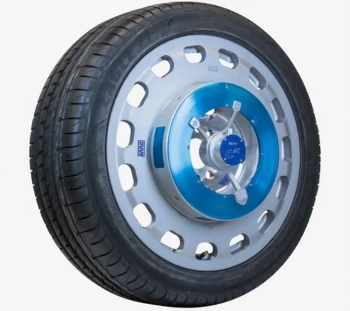
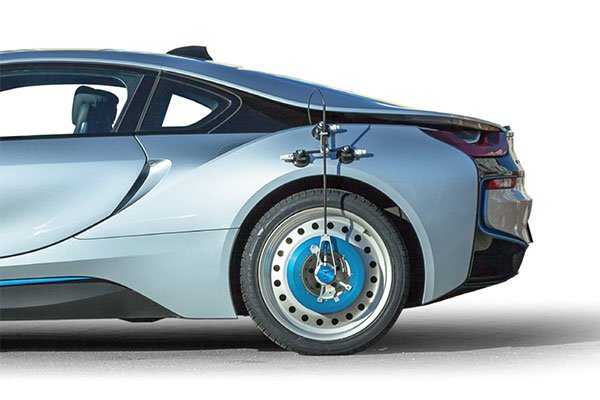
Kistler WFT
Kistler WFT for Passenger Cars and Test Tracks
Kistler WFT systems are widely recognized for their precision and usability in the automotive measurement market. The Kistler wheel force transducers for passenger cars are engineered to measure wheel forces and moments on test tracks and at test stands with high accuracy and low crosstalk.
A major advantage of Kistler WFT is its support for multiaxial wheel force transducer measurement, which means it captures forces and torques in multiple directions without compromising test quality.
Why It Matters
Why Wheel Force Measurement Matters
A modern wheel force measuring system does more than simply record load values. It allows test engineers to understand how the vehicle interacts with the road in real time.


Applications
Applications of Wheel Force Transducers
Benefits
Benefits of Advanced WFT Systems
The main benefit of an advanced wheel force transducer is accuracy. Systems like imc WFT and Kistler WFT are engineered for force and moment measurement with minimal signal distortion.


Auto Technical Service India Pvt Ltd
Wheel Force Transducer Support for Automotive Testing
Auto Technical Service India Pvt Ltd provides these services with advanced wheel force transducer solutions for automotive testing, chassis development, and road track measurement applications.
The company supports customers with reliable wheel force measuring systems, application guidance, and technical solutions designed to improve measurement accuracy, testing efficiency, and vehicle development performance.
Next Step
Plan Your WFT Measurement Setup
Get help choosing wheel force transducer capacity, mounting, acquisition, and analysis options.
Fast response for product selection, quotation, and technical consultation.