
Precision Vehicle Automation
Precision Driving Robots for Advanced Vehicle Testing
Automate steering, braking, and acceleration with unmatched accuracy and reliability.
Explore Now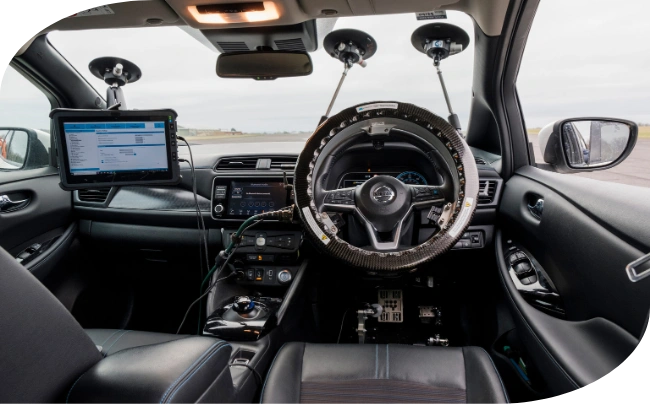
Driving Robots
What is Driving Robots
Driving robots are advanced automated systems that control steering, braking, and acceleration with high precision during vehicle testing. They enable consistent and repeatable test conditions, reduce human error, and play a vital role in the development of autonomous and high performance vehicles by simulating real-world driving scenarios safely and efficiently.
They also enhance testing productivity by enabling continuous operation and reducing dependency on manual drivers. Additionally, they integrate seamlessly with data acquisition systems to deliver accurate, real-time performance insights for better decision-making.
Types Of Driving Robots
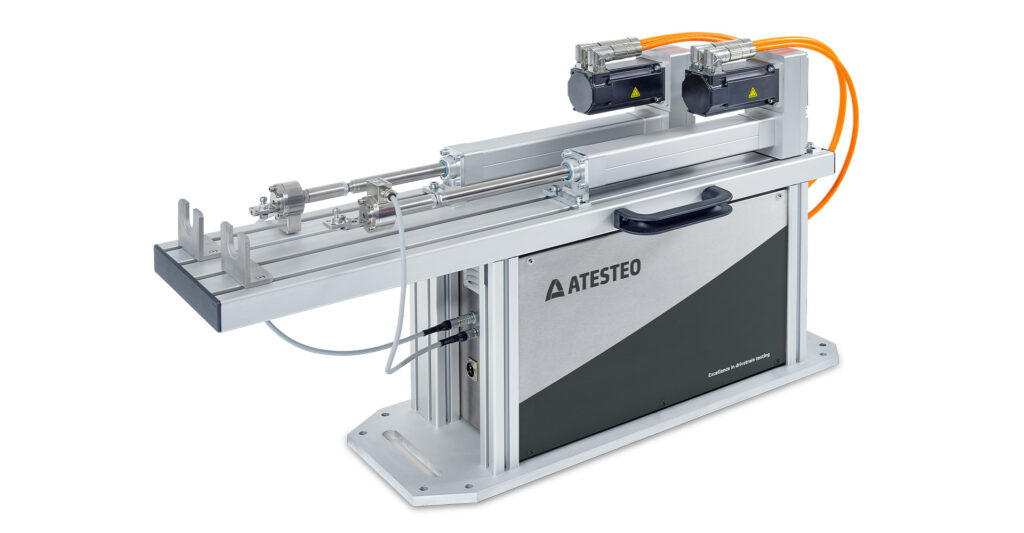
Atesteo Actuator
The Atesteo Actuator is a high-performance motion control solution designed to replicate real driving forces in automotive testing. It ensures precise actuation of vehicle components, making it essential for evaluating powertrain efficiency, chassis dynamics, and overall vehicle performance under controlled and repeatable conditions.
It offers high responsiveness and accuracy, enabling engineers to simulate complex load scenarios with confidence while integrating smoothly with modern automotive testing systems.
Road Simulation
SEA Four & Two Poster
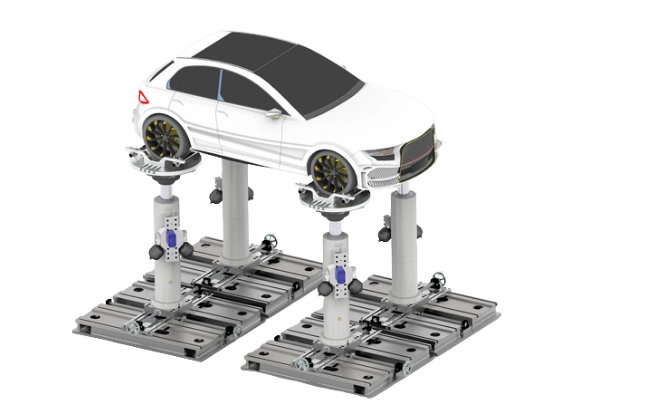
SEA Four and Two Poster systems are sophisticated testing platforms used to simulate road inputs by applying controlled forces to vehicle wheels and axles. These systems are widely used for durability, vibration, and suspension testing, helping manufacturers enhance ride quality, structural strength, and long-term reliability.
Their modular design allows flexibility for different vehicle types and testing requirements while reducing the need for extensive on-road testing.
Enhance Testing Performance
Contact Us TodayCoupled Simulation
SEA Four + Two Body Coupled
SEA Four + Two Body Coupled Road Simulators provide an advanced testing environment by combining wheel and body excitation. This integrated approach allows engineers to accurately replicate real driving conditions, analyze vehicle-body interaction, and improve ride comfort, safety, and overall vehicle dynamics.
They enable synchronized simulation of road inputs and body movements for highly realistic testing scenarios while supporting faster validation cycles.


Multi-Axial Testing
SEA MAST
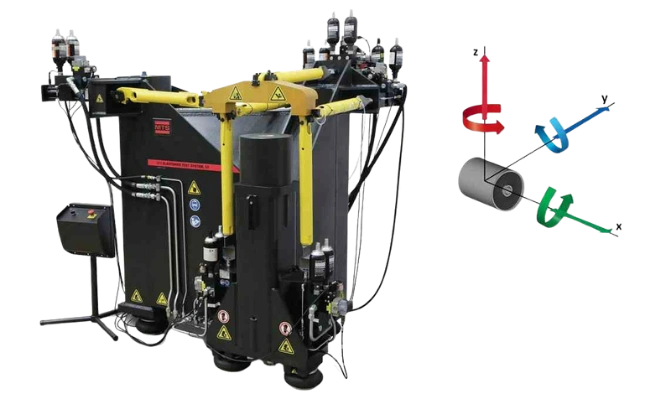
SEA MAST is an advanced testing system that simulates complex, multi-directional forces acting on vehicles and components. It is widely used for durability and fatigue testing, ensuring that products can withstand real-world stresses and deliver consistent performance over time.
It provides precise control over multiple axes, enabling accurate replication of real-life operating conditions and helping accelerate product development.
Sensor Integration
Steering Effort Sensor
The innovative CLSx steering effort sensor measures torque, steering angle, and velocity with high precision. It also acquires acceleration in the center of the steering column and rotational acceleration, making it highly useful for ADAS and autonomous driving test programs.
Its high-resolution converters ensure especially good signal quality and low-noise results even at small moments below 3 Nm.


Suspension Testing
SEA Damper Test Systems
SEA Damper Test Systems are designed to analyze and optimize the performance of shock absorbers under various conditions. By measuring damping characteristics with high accuracy, these systems help improve vehicle stability, ride comfort, and suspension efficiency.
They allow testing across different speeds, loads, and frequencies for performance evaluation and reliable suspension system development.
Height Measurement
LHT Light Height Sensor
The LHS is used for non-contact distance measurement, pitch and roll angle measurement, and dynamic camber angle measurement. It works according to the triangulation principle and is available with different measuring ranges.
The compact sensor offers CAN and analogue outputs and can be mounted on almost all vehicles with different holder options.
Improve Vehicle Testing
Request Quote
Elastomer Testing
SEA Elastomer Test Systems
SEA Elastomer Test Systems are used to evaluate the behavior of rubber and elastomer components such as bushings and mounts. They test stiffness, durability, and vibration properties, helping reduce noise, vibration, and harshness while enhancing overall vehicle comfort and longevity.
They support both dynamic and static testing for comprehensive material analysis and improved component reliability over time.
Force Measurement
Wheel Force Transducer
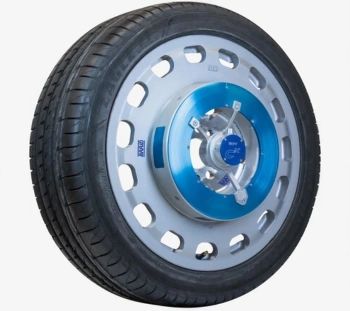
The 6-component Wheel Force Transducer WFT-Cx measures all forces and torques acting on the vehicle with high precision. Its robust housing protects against dirt, water, and snow, allowing applications in any weather.
It simplifies the testing and measuring of load profiles, driving dynamics, and braking in all applications where weight and accuracy play a decisive role.
Support
FAQs
1. What are driving robots used for?
Driving robots are used in automotive testing to control steering, braking, and acceleration with precision. They help simulate real-world driving conditions safely and ensure consistent, repeatable test results.
2. What industries use these testing systems?
These systems are widely used in the automotive industry, including passenger vehicles, commercial vehicles, electric vehicles, and research and development centers.
3. How do road simulators improve vehicle development?
Road simulators replicate real-world conditions in a controlled environment, helping engineers accelerate validation, improve ride quality, and reduce costly on-road testing.
4. Can driving robots work with data logging systems?
Yes, they integrate well with data acquisition and logging systems to provide accurate, real-time test insights and performance tracking.
5. Why are steering effort sensors important?
They help engineers measure torque, steering angle, and dynamic loads precisely, which is especially valuable for ADAS and autonomous driving test programs.
6. Are these systems suitable for durability testing?
Yes, many of these solutions are specifically used for durability, fatigue, suspension, and structural validation under repeatable high-load conditions.
Contact ATS Group
Need a driving robot solution for your test program?
Use this section as your final enquiry CTA or replace it with your preferred contact form.