Simulation
EZMotion data from track testing can be used to develop drive files for multi-poster test rigs and later validate the accuracy of the driver file.

Vehicle Sensor Systems
Delivering real-time data for better safety, efficiency, and performance.
Explore Sensors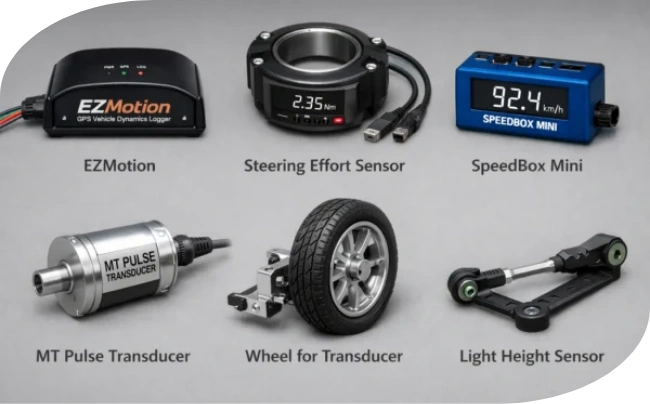
Sensor Overview
Sensors in a car are electronic devices that monitor physical conditions such as temperature, pressure, speed, position, and environmental changes. They convert these measurements into electrical signals and send them to the ECU, or Engine Control Unit, which acts like the brain of the vehicle.
The ECU then analyses this data and makes real-time decisions to control systems in the car. This communication ensures optimal performance, better efficiency, and enhanced safety.
EZMotion
Types Of Sensors
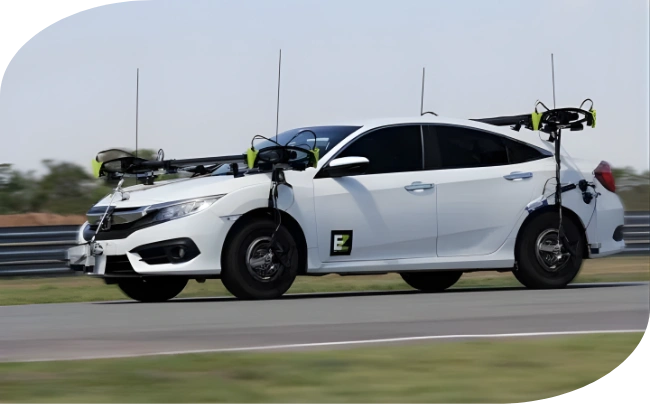
EZMotion data from track testing can be used to develop drive files for multi-poster test rigs and later validate the accuracy of the driver file.
EZMotion records digital and analogue data simultaneously and synchronizes with accelerometers, load cells, and other collection equipment. Output supports formats including TXT, CSV, M, spindle, and CAD files.
EZMotion does not require a special controller and can operate from a passenger-seat computer with easy-to-use touchscreen software for fluid operation.
Sensor Product
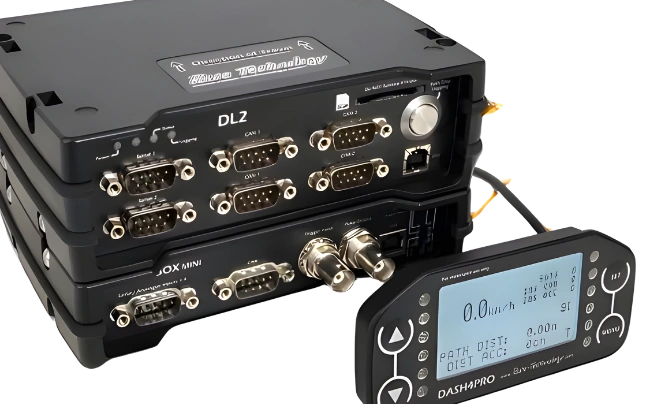
Both the SPEEDBOX and SPEEDBOX MINI are very high accuracy non-contact speed sensors designed for professional automotive testing, industrial applications, and high-end motorsport environments.
They combine GPS and inertial data using an adaptive filter for exceptional performance even when GPS conditions are not ideal. CAN, RS232, and configurable digital pulse outputs are provided as standard.
Wheel Measurement
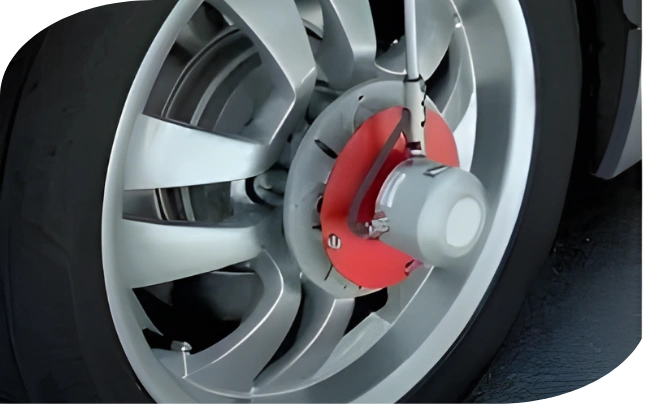
The MT pulse transducer has been specially developed for measurement of wheel speed in vehicles. It supports calculation of wheel speed, distance, and vehicle speed, making it suitable for slip, acceleration, ABS tests, and other measurement tasks.
The assembly uses a robust clamping system attached directly to the rim, with optional suction or magnetic body mounting. It is available with 25 to 5000 pulses per revolution.
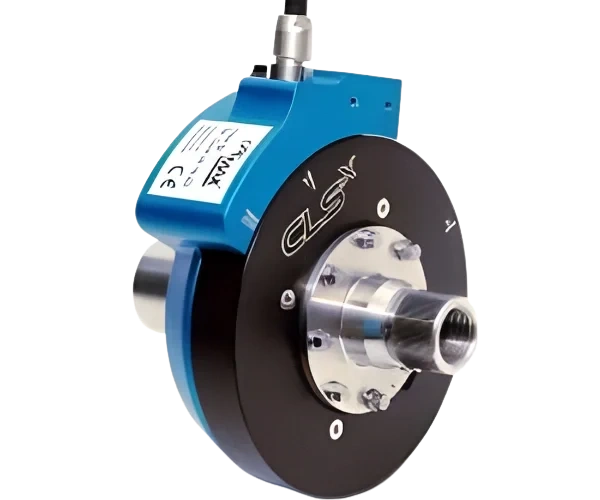
ADAS Testing
The innovative CLSx steering effort sensor measures torque, steering angle, and velocity with high precision. It also records acceleration in the center of the steering column across x, y, and z directions, along with rotational acceleration.
Its 24-bit high-resolution A/D converters deliver excellent signal quality and low-noise results, which is especially important for ADAS and autonomous driving validation.
Distance Measurement
The LHS is used for non-contact distance measurement, pitch and roll angle measurement, and dynamic camber angle measurement. It works according to the triangulation principle and is available in different measuring ranges.
The sensor is compact and lightweight, provides CAN and analogue outputs, and can be mounted on almost all vehicles with suction or magnetic holders depending on the version.

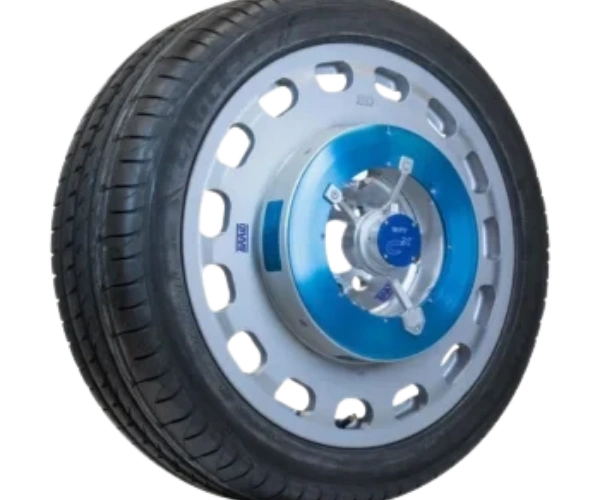
Force Measurement
The 6-component Wheel Force Transducer WFT-Cx measures all forces and torques acting on the vehicle with high precision. Its robust housing protects against dirt, water, and snow for all-weather applications.
It is also available for small cars with rims from 13 inches, including a lighter WFT-Cxs variant for applications where weight matters.
Use Cases
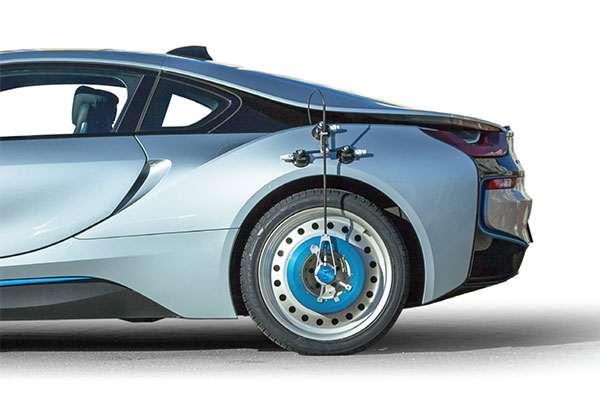
Use WFT systems during test drives to determine real component stress in new vehicle development, even across multi-day testing.
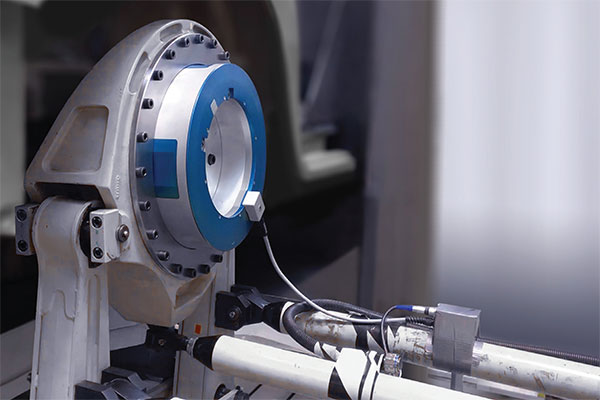
Durable titanium and steel housings support component lifetime testing, with telemetric transmission options and compatible adapter reuse.
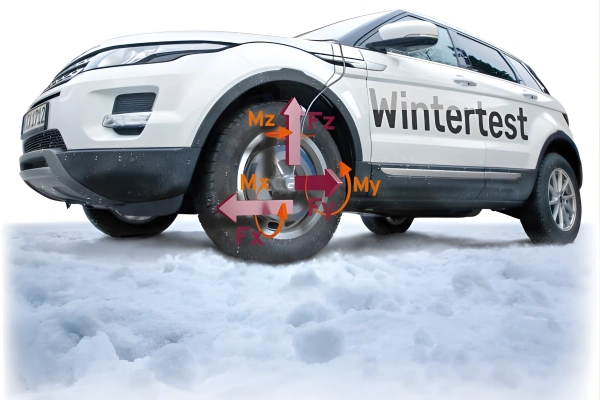
The waterproof design and wide operating temperature range support testing in ice, snow, meltwater, and rough terrain conditions.
Support
Sensors are electronic devices that detect and measure parameters like speed, temperature, pressure, and position, and send this data to the vehicle's ECU for proper functioning.
They improve safety, performance, fuel efficiency, and emissions control by helping the car make real-time decisions.
Common examples include oxygen sensors, temperature sensors, speed sensors, ABS sensors, and parking sensors.
Sensors collect data, convert it into electrical signals, and send it to the ECU, which processes the information and controls vehicle systems accordingly.
Most sensors are replaced rather than repaired, and the process is usually quick and cost-effective.
Yes, modern cars use advanced sensors like radar, cameras, and lidar for features such as adaptive cruise control and lane assist.
Contact ATS Group
This CTA block is ready to connect to your own form, WhatsApp button, or WordPress contact section.